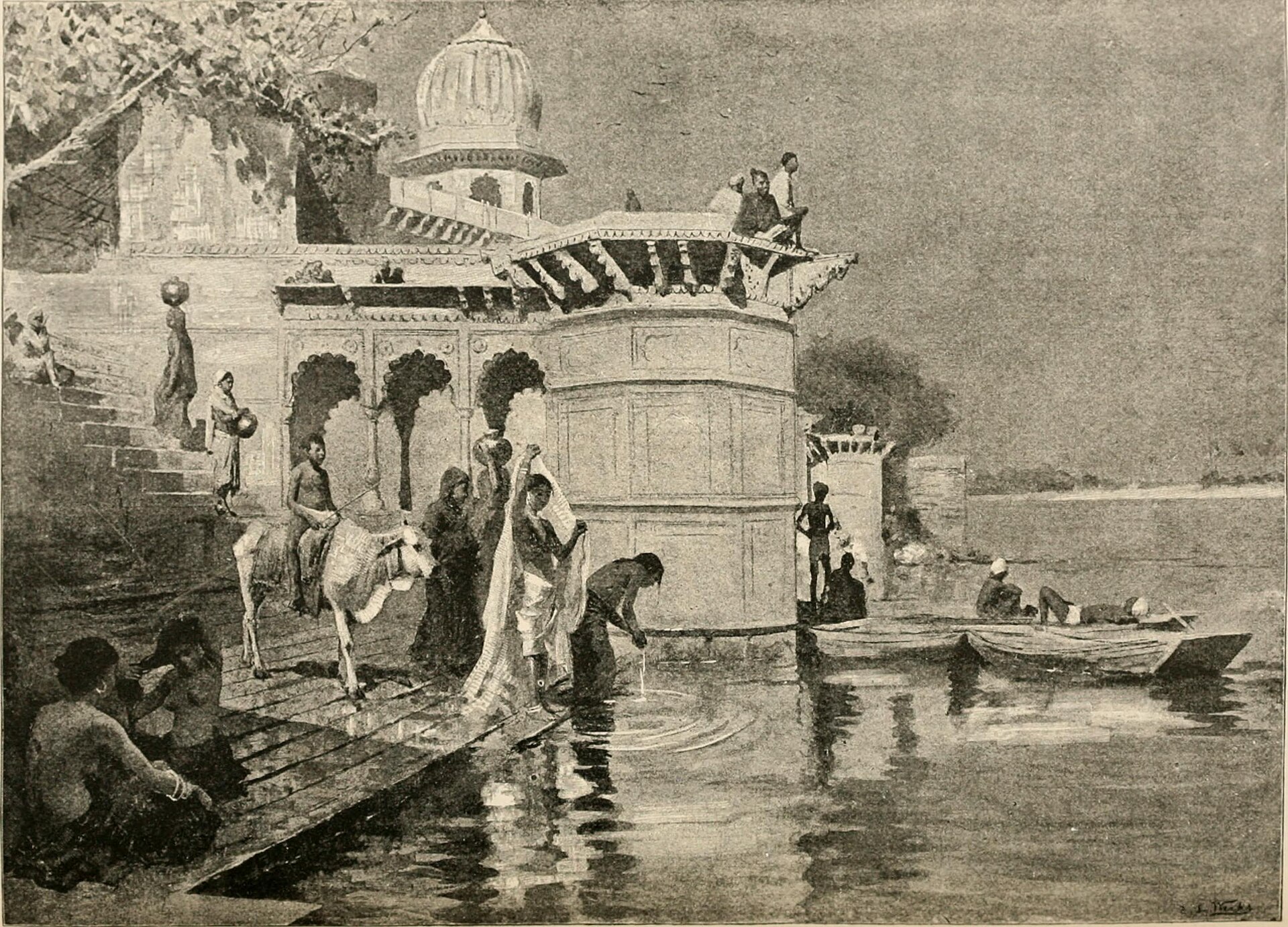
The Ganga Aarti at Dashashwamedh Ghat is a nightly fire ceremony performed at dusk by a row of young priests with towering brass lamps, conch shells and bells — the single image most travellers carry home from Varanasi. It begins around 6:45–7:00 PM in winter (later in summer); arrive 45 minutes early for a seat on the steps, or watch from a boat to escape the crush. Dashashwamedh is about 700 metres — an 8-to-10-minute flat walk — from our door opposite Gate No. 4.
This guide covers the timing, the best vantage points, how to get a good spot, etiquette, and the nights when the aarti becomes truly extraordinary.
What is the Ganga Aarti?
The Ganga Aarti is a devotional ceremony of light offered to the river Ganga, worshipped as a living goddess. Each evening, a line of priests in matching robes move heavy, multi-tiered brass lamps in slow synchronised arcs, wreathed in incense smoke, to the sound of chanting, conch, bell and drum. It lasts roughly 45 minutes to an hour and draws crowds every single night of the year, rain or shine.
Dashashwamedh is the grand, organised, large-scale aarti — the one you have seen in photographs. It is free to watch from the ghat steps, and it is the beating heart of a Varanasi evening.
What time does the Ganga Aarti start each evening?
The aarti starts around 6:45–7:00 PM in the winter months and a little later (closer to 7:00–7:30 PM) in summer, following sunset. It runs nightly, all year. On special occasions the timing and scale change — Dev Deepawali and Kartik Purnima in particular turn it into an amplified spectacle.
Because start times shift with the season and the ritual calendar, confirm the exact time on the day. If you are staying with us, our front desk gives you the evening's time and the best moment to leave.
Where exactly is Dashashwamedh Ghat, and how do I get there?
Dashashwamedh is the central ghat of Varanasi, about 700 metres from our hotel — an 8-to-10-minute flat walk down through Godowlia. It is the most direct and famous of the ghats, and the pedestrian route to it is straightforward.
To walk there from the temple area, head toward Godowlia crossing (about 450 metres / 5–6 minutes) and continue straight down to the river; the ghat is at the end of the lane. Vehicles cannot reach the ghat itself — the final stretch is pedestrian-only — so everyone arrives on foot.
Staying a short flat walk away changes the evening completely: you can finish an early dinner, stroll down, watch the aarti, and be back in calm within the hour, instead of negotiating a long taxi ride and a walk through crowds in the dark. See how to reach us for the route into the old city from the station or airport.
Where is the best place to watch — the steps or a boat?
Both are excellent; a boat is the better choice on busy nights and for photographs, while the steps put you closest to the priests and the chanting.
- On the ghat steps — free, immersive, and close to the ceremony. Arrive early for a front stair position. This is the classic experience, but the central steps fill fast and can feel tightly packed.
- From a boat on the Ganga — you face the whole illuminated ghat from the water, above the crush, with an unobstructed view of all the priests at once. Boats gather in a floating audience just off the ghat. This is the calmest, most photogenic vantage, especially for families and elders.
- From an upper terrace or balcony — some buildings along the ghat offer elevated views; be wary of strangers offering paid "rooftop" access, as scams are common here.
Many of our guests take a shared or private boat to watch the aarti from the water — we can arrange the seat and the timing as part of our boat & aarti experiences. Just mention it when you request a stay.
How do I get a good spot for the Ganga Aarti?
The secret is simply arriving early and deciding in advance between the steps and a boat. Here is the reliable approach:
- Confirm the night's start time (ask reception, or check locally) and plan to leave about an hour beforehand.
- Choose your vantage: steps for immersion, boat for the panorama and comfort.
- For a stair seat, arrive 45 minutes to an hour early and settle on the central steps facing the aarti platforms.
- For a boat, book earlier in the day — boats are in high demand at dusk — and board from an adjacent ghat before the ceremony begins.
- Travel light: carry only a phone, a little cash, and water. Leave valuables in your room safe.
- Stay seated until the end; the finale, with all the lamps raised together, is the moment to watch.
Because we are an 8-to-10-minute walk away, guests who stay opposite Gate No. 4 can leave later than most and still claim a good position — and drop everything back in the room first.
Is there a morning Ganga Aarti too?
Yes — the Subah-e-Banaras morning aarti takes place at Assi Ghat at sunrise, and it is a gentler, less crowded counterpart to the evening spectacle. It pairs sunrise aarti with classical music and yoga on the steps.
Assi Ghat is about 4 km from us — roughly a 15-minute auto ride, or a memorable one-way dawn boat ride upriver. Subah-e-Banaras begins around first light, which shifts through the year, so check locally or ask our front desk for the exact time on your dates. A dawn boat from the central ghats up to Assi, watching the whole ghat line wake, is one of the finest ways to spend a Varanasi morning.
How much does the Ganga Aarti cost? Do I need a ticket?
Watching from the ghat steps is completely free — there is no entry ticket, and you should never pay anyone for a "seat" on the public steps. The only real costs are optional:
- A boat ride to watch from the water — shared or private. Our team confirms the current boat rates when they call to confirm your stay, so you get a fair, fixed price rather than a dockside negotiation in the dark.
- Small donations at the ghat, which are voluntary.
Be firm with touts who insist on payment for public viewing or press unsolicited "tours" on you. If you would like a boat, arranging it through us means a fair, fixed price and a known boatman rather than a dockside negotiation.
What should I know about safety, etiquette and photography?
The ghats are crowded and joyful, but a few sensible habits make the evening smoother:
- Mind the crowd and your belongings — keep valuables in your room; carry only what you need. Watch your footing on the steps, which can be uneven and slippery near the water.
- Photography is welcome at Dashashwamedh — but be respectful of worshippers, and never use flash into people's faces during the ceremony.
- Manikarnika Ghat is different. The nearby cremation ghat (about 650 metres) is an active funeral ground, not a photo stop — photography of pyres is prohibited and disrespectful, and you should decline strangers offering paid "rooftop views" there.
- Dress modestly and remove footwear where indicated near shrines.
- Watch children closely in the crowd, and agree a meeting point in case you are separated.
When is the Ganga Aarti most spectacular?
The aarti is extraordinary every night, but it reaches its peak on Dev Deepawali — celebrated on Kartik Purnima (in 2026, the night of Tuesday, 24 November). On this one night, lakhs of earthen diyas line the entire ghat crescent, the river glows, and the aarti is amplified into a grand, once-a-year spectacle.
Other high points include Kartik Purnima more broadly, Ganga Dussehra, and the winter festival season. These nights are magnificent but extremely crowded — rooftops and boats near the corridor reserve months ahead, and a room within walking distance of the ghats becomes the difference between watching the diyas and sitting in gridlock. See our direct-booking offers for the Dev Deepawali package, and our guide to the best time to visit Varanasi to plan the wider trip.
Frequently asked questions
What time is the Ganga Aarti at Dashashwamedh Ghat? It begins around 6:45–7:00 PM in winter and a little later in summer, following sunset, and runs for roughly 45 minutes to an hour every night. Confirm the exact time on the day, as it tracks sunset.
Is the Ganga Aarti free to watch? Yes — watching from the public ghat steps is free. The only optional cost is a boat ride to view it from the water. Never pay a tout for a "seat" on the public steps.
How far is Dashashwamedh Ghat from Kashi King Luxury Stay? About 700 metres — an 8-to-10-minute flat walk down through Godowlia from our door opposite Gate No. 4. You can leave after an early dinner and still find a good spot.
Is it better to watch the aarti from the steps or a boat? The steps are the most immersive and put you closest to the ceremony; a boat gives an unobstructed panorama above the crowd and is calmer and more photogenic — ideal on busy nights and for families. We can arrange the boat and timing.
How early should I arrive for a good spot? For a seat on the steps, arrive 45 minutes to an hour before the start. For a boat, book earlier in the day and board before the ceremony begins.
When is the best night to see the Ganga Aarti? Dev Deepawali, on Kartik Purnima (in 2026, the night of 24 November), when the entire ghat crescent is lit with diyas and the aarti becomes a grand spectacle. It is spectacular but very crowded — book accommodation near the ghats months ahead.